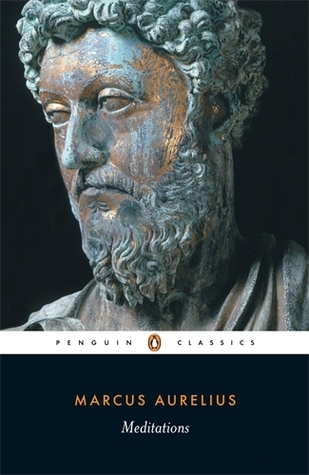
Meditations is one of the most impactful books I’ve ever read. It sparked something in me that has only grown stronger over the years. I’m happier, more focused, more resilient, and more at peace because of what I learned from Marcus Aurelius. This is the only book I keep re-reading every few years, and it sits at the top of my list of mandatory reading for my children.
The book is a collection of private notes that Aurelius wrote to himself while ruling the Roman Empire. He never intended for anyone else to read them. What you get is an unfiltered look at how one of history’s most powerful men wrestled with the same struggles we all face: anger, frustration, anxiety, impatience, pride, envy, greed. He constantly reminds himself to be humble, to accept what he cannot change, to focus on what is within his control.
The insight that changed me most is deceptively simple: we are not bothered by events, but by how we interpret them. A traffic jam, a rude colleague, a failed project. None of these things are inherently good or bad. Our suffering comes from the stories we tell ourselves about them. Once I internalized this, I started catching myself in moments of frustration and asking whether the situation itself was the problem, or my reaction to it. The answer is almost always the latter.
People sometimes mistake Stoicism for passivity. If you accept what is outside your control, does that mean you do nothing? Aurelius shows the opposite. Stoicism is about directing your energy toward what you can influence and taking action there. It is proactive, not passive. You stop wasting time on things you cannot change so you can focus on things you can.
What also stayed with me is the emphasis on virtue as the only true good. Wisdom, justice, courage, temperance. Aurelius reminds us that each small action is a choice to live according to these values. You do not need grand gestures. You need consistency in the ordinary moments.
This book is for anyone who feels pulled in too many directions, who struggles with anxiety about things outside their control, or who wants a practical framework for living well. If you prefer self-help books with step-by-step instructions, this might frustrate you. Aurelius does not give you a system. He gives you a way of seeing.
Read this book slowly. Let it sit with you. I keep coming back to it because its lessons need repeating. The ideas are simple, but living them takes a lifetime of practice.
My highlights
It is, in other words, not objects and events but the interpretations we place on them that are the problem. Our duty is therefore to exercise stringent control over the faculty of perception, with the aim of protecting our mind from error.
If anyone can refute me—show me I’m making a mistake or looking at things from the wrong perspective—I’ll gladly change. It’s the truth I’m after, and the truth never harmed anyone. What harms us is to persist in self-deceit and ignorance.
Everywhere, at each moment, you have the option: to accept this event with humility; to treat this person as he should be treated; to approach this thought with care, so that nothing irrational creeps in.
Forget everything else. Keep hold of this alone and remember it: Each of us lives only now, this brief instant. The rest has been lived already, or is impossible to see.
So remember this principle when something threatens to cause you pain: the thing itself was no misfortune at all; to endure it and prevail is great good fortune.
Stop allowing your mind to be a slave, to be jerked about by selfish impulses, to kick against fate and the present, and to mistrust the future.
The present is all that they can give up, since that is all you have, and what you do not have, you cannot lose.
The things you think about determine the quality of your mind. Your soul takes on the color of your thoughts.
Choose not to be harmed—and you won’t feel harmed. Don’t feel harmed—and you haven’t been.
You could leave life right now. Let that determine what you do and say and think.