Personal branding

I recently started a new business to help organizations improve how they develop software. With over two decades of professional experience, I know what I can contribute and what difference I can make, but what good does that do if no one else knows? To avoid that, I decided to get serious about personal branding.
First off, I’m not building a platform from scratch. I have a long history of writing, podcasting, and speaking, and a small but focused audience. But I’ve never been deliberate about growing this audience, intentional about how I portray myself, or very consistent in my approach. I’ve had a thought, jotted it down in an article or social media post, and then moved on. So I have a base but a lot of work to do.
How do you actually improve this? Same way I get better at anything: I read a pile of books about it. This is a summary of what I learned, what worked, and what didn’t.
Because it did work, in ways I did not expect. I’m four weeks into building my brand consistently, systematically experimenting and learning. Nothing fancy — no content calendar, no five-year plan. I just started, and that’s one very real thing I got from the books: the best way to learn is to do, and the best way to do is to start.
No single book gets the credit. It was the same handful of ideas turning up over and over, across books that run from genuinely excellent to badly out of date, until I ran out of ways to ignore them. (This is exactly why I read by themes.)
What got through to me
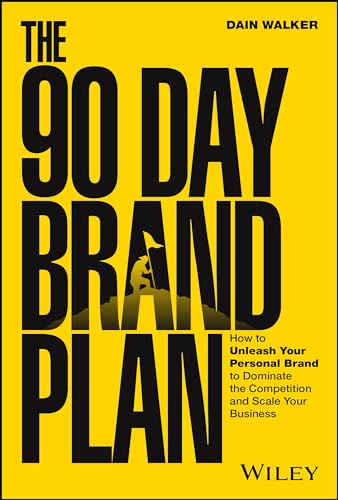
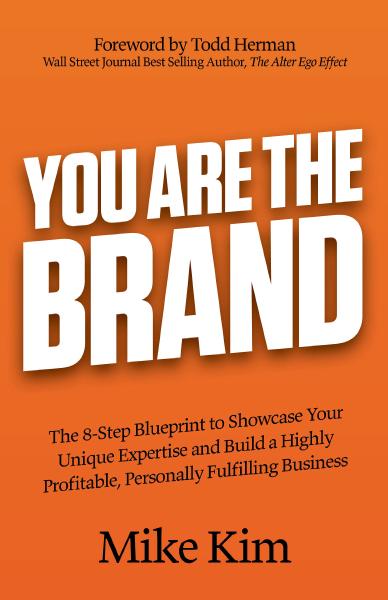
The one idea that landed hardest is a way of seeing the whole thing. A personal brand isn’t a mask you put on for other people. Dain Walker frames it as actualizing your future self: pick who you want to become, then behave like that person now. Mike Kim says much the same — the brand grows out of you, it isn’t bolted on. And Amelia Sordell comes at it backwards: you already have a personal brand whether you asked for one or not, so you may as well steer it.
Put together, that quietly took apart any imposter syndrome. If all I’m doing is growing into who I’m already trying to be, there’s nothing to fake and nothing to defend. It’s never been my biggest hangup, but even this far into my career it still shows up now and then — and even a little of it is enough to stop me putting myself out there and experimenting in public, where the failures land in public too.
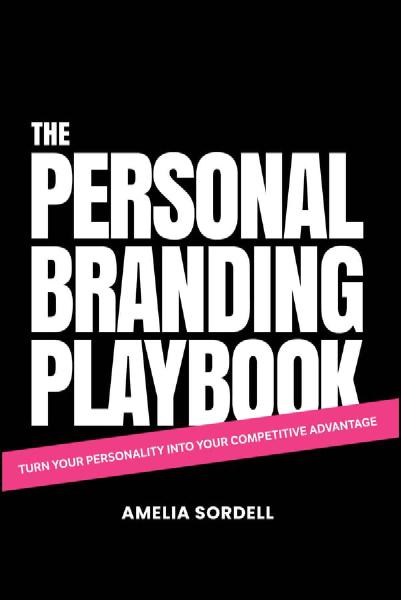
My other hangup is being an engineer to the bone. I want to write a thought down once, file it, and move on. Sordell’s The Personal Branding Playbook gave me permission to repeat myself, to say the same thing again and again in different shapes for different people. Everything in me resists this but I’m trying.
Then there’s consistency, which every one of these authors bangs on about, and which I clearly needed to hear more than once. “10% content, 90% consistency”, says Sordell, and the 90% is exactly where I come apart.
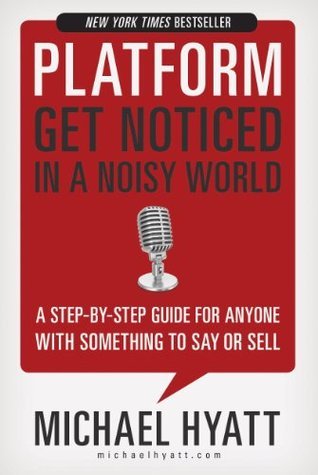
Walker puts it well: post every day and you get 365 attempts a year, so no single post has to be excellent. Michael Hyatt is blunt that the actual job is showing up, for years, and most of his tips exist mainly to make that easier.
Normally, I start chasing the next shiny thing and lose interest the moment results don’t turn up overnight. That one hurt, because it’s dead on.
I genuinely enjoyed that Walker and Kim reached for the exact same image, independently. A campfire. Walker builds his whole framework on it, your content the fire people drift toward out of the dark. Kim turns it into a test for what belongs in your brand — “can I build a campfire around this?” Same picture, two authors, and it works both times. I’ll carry that one with me for a long time.
Lastly, one problem I walked in with was that I’m interested in too much. Software, fitness, philosophy, coaching, writing, podcasting, leadership. Every time I want to post about one, I worry I’ll lose the people who came for another. Everyone says pick a lane, but I couldn’t — I’ve got a graveyard of half-finished projects to prove it.
Kim names it exactly: a scattered brand is a club playing five music genres at once, so nobody comes in. I know. I KNOW. And for years that’s where it ended, because I could see the problem and had no way out of it.
This time I found one, pieced together across the shelf. It comes in two parts.
The first is that the brand is a means to an end. Once I got honest about the end — driving business opportunities, opening professional doors — the focus stopped being a matter of taste. Kim works backwards from exactly that: start with the goal, work out who you need to reach, and let that decide what you talk about. My one thing doesn’t have to be the thing I love the most; it has to serve the end.
The second part is that a focus doesn’t wall off the rest. My other interests turn into the way I explain the main one — the nerves before a jiu-jitsu competition make a fair stand-in for the nerves before a product launch, and Hyatt runs his own outside interests through his focus the same way rather than starting a second brand for each. A bit of my actual life still belongs here too; Sordell keeps about 30% of her content on the person behind the work, because that’s what earns trust for the other 70%. A hike with the kids is on-brand for me after all.
Plus, considering the bottom line, focusing pays off commercially. A tighter niche turns strangers into clients faster, and once they’re clients, Walker’s clever idea of “dessert” lets me offer them the addons they’d never have hired me for cold.
Where they lost me
So what didn’t I like?
For one, these people seem to be allergic to selling. As a group they’re so squeamish about asking for money it’s almost comical. Walker calls “come to my event” hard selling. Sordell proudly asked her audience to buy something three times in over three years. Three times! They’re leaving money all over the floor, and I don’t buy that asking well and building real relationships pull in opposite directions.
For the mechanics of it, offers and pricing and the rest, every one of these books is thin, and I’d send you to Alex Hormozi’s $100M Offers and $100M Leads instead.
Next, all the woo-woo. Sordell serves up a “vibrational frequency” scale of emotions as “scientifically proven”, then links some pseudoscience website as her evidence. Kim credits his enneagram type for working himself out and, worse, cheerfully recounts helping a client sell her own radio-wave hypochondria to her customers.
My advice? Read one book on personal branding, and make it Walker’s. The others mostly earn their place by echoing it.
However, the reading was never the prize. The prize is that it finally shoved me into doing the thing — and, along the way, settled the focus question I’d circled for years. I’m posting now, and for the first time I actually know what I’m posting about. Which is more than I managed in all the years I spent reading about it.
Books in this theme
5 of 5 books read
1085 of 1085 pages read